
Haiku 5.5 in Cursor with Sume MCP: a 150k request costs 8x a 90k one
Cursor adds Claude Haiku 5.5 from Settings > Models. Its price steps up above 100k input tokens: 90k costs $0.009 and 150k costs $0.075 before output.

Calling Sume from automation platforms, serverless functions, agent frameworks, and MCP clients. Each uses plain HTTPS or remote MCP, not a connector.
Cursor adds Claude Haiku 5.5 from Settings > Models. Its price steps up above 100k input tokens: 90k costs $0.009 and 150k costs $0.075 before output.

Sume says hosted MCP takes an OAuth token or an API key, never one for the other. Do not paste a token into x-api-key or mint a key as a workaround.

One https://mcp.sume.com/mcp URL, three shapes: claude mcp add --transport http, Cursor's mcpServers url, and VS Code's servers with type http.

In VS Code, declare a promptString input with password true and reference it as ${input:id} in the x-api-key header, so the Sume key never lands in mcp.json.
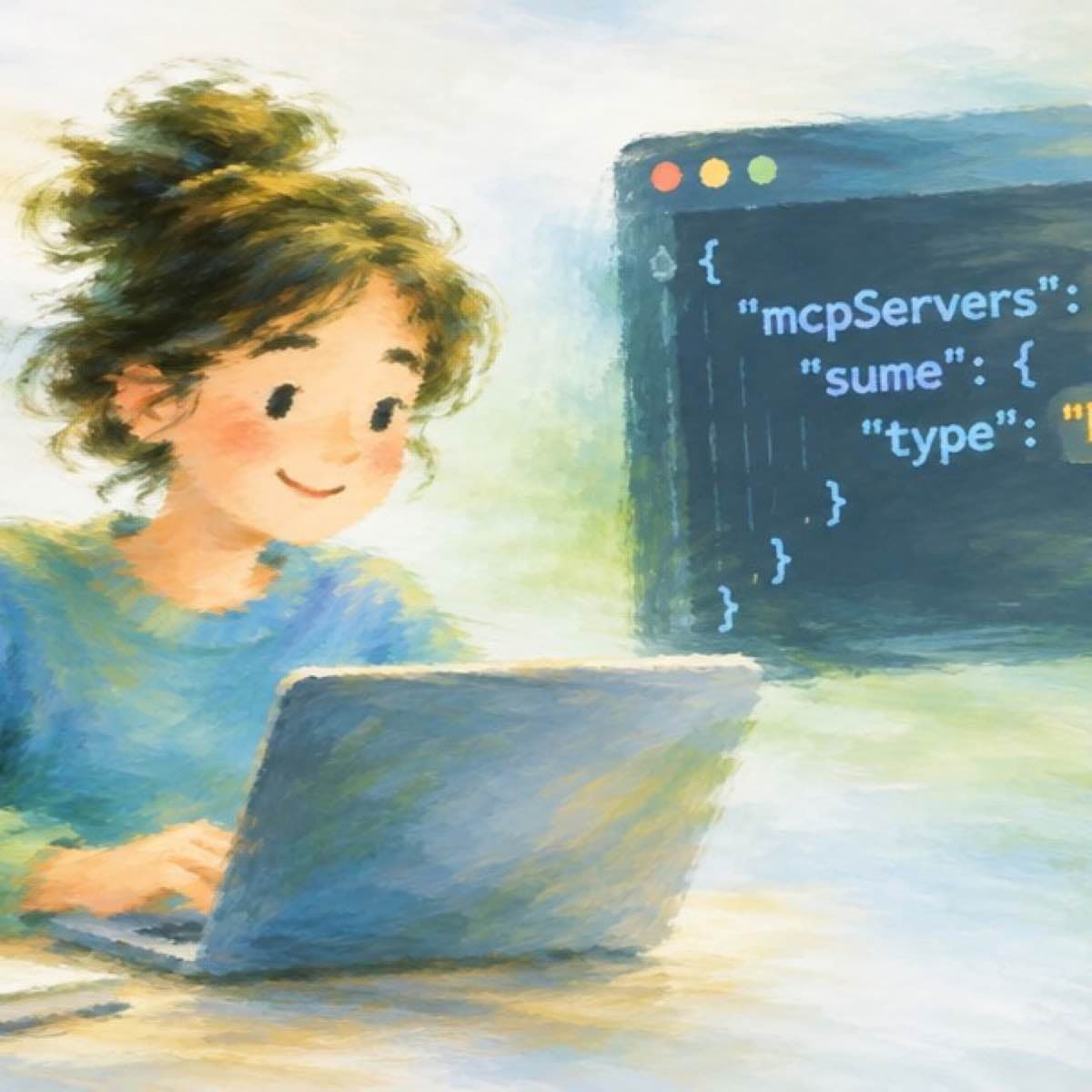
VS Code accepts type http or sse for a remote MCP server. Sume documents a streamable HTTP endpoint at https://mcp.sume.com/mcp, so use type http and a url.

A cron or CI agent cannot click a consent page. Sume's docs give OAuth to interactive clients and API-key remote MCP to automation, with caps set per call.

With OAuth read-only (mcp:read), an agent on Sume's hosted MCP can still read jobs, assets and the catalog and scrape pages. Writes and paid tools fail.

Codex can read a bearer token from an environment variable, so your Sume API key never lands in config.toml. Setup, the OAuth alternative, and what to check.

Codex stops a tool call after 60 seconds by default. Sume jobs_wait holds at most 55 seconds, so one slice fits. Here is the loop and the config.

Copilot in Xcode and JetBrains sends remote MCP auth through requestInit headers. Here is the Sume API key entry, what it unlocks, and how to test it.

n8n's MCP Client Tool offers Bearer, header and OAuth2 auth and a Selected tools mode. Set it up against Sume's mcp.sume.com/mcp, and know the endpoint caveat.

Reuse the same idempotency_key to retry a paid Sume MCP call that timed out. A new key makes a new job. A reused key with a different payload returns 409.

images_create and videos_create are REST-only. On hosted MCP the router tools generate_image and generate_video cover stills and clips. Fallback and checks.

A 524, 522, 523 or 525 on Sume jobs_wait is a transport failure, not a job result. Wait again on the same ids and never resubmit the paid create.

Each Zapier MCP tool call uses two tasks. When an agent uses Sume and Zapier together, wait on all jobs in one jobs_wait, then make one Zapier call.

Claude Code can run a script for MCP headers on every connection. Use it to feed a Sume API key from a secrets store, so rotation needs no config edit.

Claude Code truncates MCP output past 25,000 tokens by default. Sume include_results and batch jobs_result keep wave answers small. Settings and loop.

Claude Code has no short default tool timeout, so a stalled Sume jobs_wait can hang. Set a per-server timeout in .mcp.json and let the agent retry slices.

In Gemini CLI settings, url is the SSE endpoint and httpUrl is HTTP streaming. Sume's endpoint is streamable HTTP, so use httpUrl. Config and checks inside.

Gemini CLI can allowlist MCP tools with includeTools, and trust defaults to false. Use both to give an agent Sume reads without paid generation.

Gemini CLI waits up to 10 minutes per MCP request, but Sume cuts jobs_wait at 55 seconds. Set the client timeout low and loop on wait_slice_expired.

Roo Code alwaysAllow skips the approval click. Auto-approve Sume read tools only, and keep paid ones manual or behind dry_run and a spend cap.

Roo Code defaults MCP requests to 60 seconds and allows 1 to 3600. Here is the streamable-http entry for Sume with a timeout that fits jobs_wait.

A Sume MCP tool returns insufficient_scope when an OAuth session has mcp:read only. Fix it by re-consenting with Write on, or by using an API key.

jobs_wait takes up to 20 job_ids and wait_for any or all. All is the default. Any returns early, but the other jobs keep running and billing. Examples inside.

An agent that submits too many paid jobs hits 429 queue_full. Accepted capacity is 6 on Free, 24 on Pro, 48 on Startup, 120 on Scale. Wave sizes inside.

script_run runs a short JavaScript program on Sume that calls tools in a loop or in parallel. timeout_seconds is 5 to 55. Use it for 3+ similar calls.

An MCP agent submits 25 rmbg_create calls, waits with jobs_wait in two slices (20 ids, then 5), and pays 25 x $0.0225 = $0.5625. Idempotency keys inside.

The hosted MCP exposes kling-motion-control_create as a paid tool that requires an idempotency_key. 8 s of motion control costs 8 x $0.1575 = $1.26.

Rules for an agent on hosted MCP: avatar-videos_create for scripts, avatar-image-to-video_create for audio, and dry_run plus max_spend_usd before any paid call.

A scheduled workflow that creates a Sume bulk queue, polls it through transient 429 and 503, and turns a completed queue with failed items into a red job.

A Deno.cron job that starts one Sume Format run each Monday, keyed by UTC date so a double fire replays, skips overlap, and hands the result to a webhook.

Read active SKUs from BigQuery, cast columns to plain JSON types, create one Sume bulk queue per 100 rows, and stream queue id, index and SKU to a map table.

n8n 2.43.0 (pre-release, Oct 6) resumes Preview agents after waiting workflows finish. Pair a long Sume run with one webhook, deduped on request_id.

A standard-library Python receiver that verifies the sume-v1 signature, rejects an empty secret, and forwards primary_output_url when a Format run ends.

OAuth fits a person at a keyboard; an API key fits an unattended agent. How Sume hosted MCP treats each, plus the guardrails to set before you leave it running.

Use Claude Code with Sume's hosted MCP to prototype one video and read costs, then run the real batch from your backend with Format bulk runs and a spend cap.

Before you let an agent spend money through any MCP connector, ask six questions. Here are Sume's hosted MCP answers on auth, scopes, idempotency and spend.

Ask an MCP client to run tts_create and music_create on Sume, then check the take with stt_create. Which tool does which job, and where the agent must wait.

Cline's remote MCP entry supports an autoApprove array. Put Sume's read tools in it and keep paid creates such as generate_image on manual approval.

For Copilot Business and Enterprise, an MCP servers in Copilot policy controls remote servers. What an admin checks before allowing Sume's hosted endpoint.

OpenClaw issue 158876: the bundled OpenAI video provider still defaults to sora-2, though /v1/videos returns 404. What to do now, and a Sume video call.

Hold every AI video for human review before it posts. A Node verifier for Sume's signed job webhooks that refuses an empty secret, plus the review steps.

Meta's Reels ads page offers native video, image ads and existing Reels posts. Which route fits an AI video from Sume, and what file to prepare for each.

LinkedIn's video ad spec says to upload the file, not link YouTube or Vimeo. How to take the MP4 from a Sume job, check it, and upload it.

Claude Code 2.1.293 fixed a leak where an HTTP MCP connection kept every request it sent. Upgrade before a long Sume session and use batch jobs_wait.

Claude Code 2.1.292 leaves out an MCP tool whose name passes 128 characters and names it in an error. Sume's longest tool name is 36, so it never trips it.

Codex 0.161.0 added /mcp login <name> to sign in to an MCP server from a live terminal session. Sign in to Sume with read access first, then add write.