
ACE-Step on Sume: 240 s max, billed per second not per minute
ACE-Step is the Music Router id ace-step: 5–240 s via duration_seconds, billed per second of audio, so a 45 s clip costs less than a 60 s one.

The models behind Sume's video, image, speech, and music endpoints: ids, clip lengths, resolutions, aspect ratios, audio, references, and migration.
Start with: What AI models does Sume support? Every model id, by API surface
ACE-Step is the Music Router id ace-step: 5–240 s via duration_seconds, billed per second of audio, so a 45 s clip costs less than a 60 s one.

CassetteAI Music runs on Sume's Music Router as cassetteai-music: 10–180 s via duration_seconds, billed per started minute, so 90 s costs two minutes.

ElevenLabs Music v2.5 is the Music Router id elevenlabs-music-2.5: 10–300 s via duration_seconds, billed per started minute, so 61 s costs two minutes.

Since Oct 14, 2026 four Sume Music Router models accept duration_seconds (5–300 s ranges); five still set length from the prompt and reject the field.
Lyria 2 on Sume's Music Router writes one 30-second instrumental clip per call and refuses duration_seconds; stitch clips or pick another engine.

MiniMax Music 2.6 on Sume's Music Router writes lyrics from your 10 to 2,000 character prompt, takes no duration_seconds and bills a flat price per track.
Stable Audio 2.5 on Sume's Music Router takes duration_seconds 5 to 190 and bills one flat price per track, so ask for the full length you need.

HelixWorld's preview caps a run at 121 frames, about 5 seconds at 24 FPS. Sume's video rows with sound run 5 to 15 seconds; here is the arithmetic and the rows.

HelixWorld, Noiz AI's interactive video-and-stereo-audio model, ships as weights and a browser demo. Sume lists no id for it; these rows return sound.

Send one picture to qwen-image-layered on Sume and get 2 to 4 transparent PNG layers, billed at $0.05 each. num_images is required; the call runs as a job.

Alibaba lists qwen-image-2.1-pro at $0.04 an image in Singapore and $0.035333 elsewhere. Sume has no 2.1 Pro row; its Qwen rows bill $0.025 and $0.094.

On Sume's TTS Router, Eleven Turbo v2.5 lists 31 languages, 20,000 characters and half the list price of Multilingual v2, which lists 28 languages.

HelixWorld's code is Apache 2.0, its weights have a separate license on Hugging Face, and the arXiv page lists CC BY-NC-SA 4.0. Read all three.

Sume's image catalog has no Qwen-Image-2.1 Turbo row. It lists Qwen Image, Qwen Image Max and Qwen Image Layered, and one call shows which.

Muse Wonder is listed on OpenRouter as a chat-completions model with text responses. It is not in Sume's image catalog; pick an image row instead.

Mistral Large 4 (Public Preview) lists function calling and structured outputs. Validate its arguments with Sume's tools_schema before any paid call.

What the vendor pages say today about Grok Imagine Video 1.5 and Lite, Gemini Omni Flash as Google's default, and HelixWorld, and which have a Sume id.

Sume lists Seedance 2.5, Kling 3, Wan 3.0, MiniMax H3, H3 Max and Omni. It lists no Kling 4.0, no Vidu Q4. Catalog snapshot, read 2026-10-13.

AWS announced Nova 2.5 Sonic on October 5, 2026: four regions, seven languages and a 256K context window for live voice agents, not rendered voiceovers.

In Decagon's test, 45.7% of listeners thought the real human voice was the AI. That is a customer-call result, not proof for ad voiceover.

Decagon introduced Chord on October 1, 2026 as the speech model inside Voice 3. Its post does not state a public API, so a voiceover job needs another model.

Sume's repo catalog lists 20 image rows: 14 take edit references, 5 are text-only, 1 makes layers. Grok is capped at n 1; Recraft is webp only.

Audio over 14.8 seconds is refused on Sume's H3 Max lip sync because the provider silently clips the rest. Fabric 1.0 takes the long line.
Sume's MiniMax H3 Max lip sync takes 5 to 14.8 seconds of audio and returns invalid_request outside that window. Fabric is the fallback for shorter lines.

Anthropic says to omit temperature, top_p and top_k on Haiku 5.5, and some values return a 400. Strip them from your loop before the first Sume tool call.

HelixBench scores whether synthesized sound fields track camera movement. What the arXiv page says it measures, and a manual way to spot-check any AI clip.

Omni Flash 1.1 (always on), Wan 3.0 (audio), MiniMax H3 and H3 Max (native stereo) take a first frame and render sound. A 5 s clip is $0.19 to $0.94 on Sume.

Only two Sume rows pass 15 seconds in one job: Seedance 2.5 (4-30 s) and Wan 3.0 (2-30 s). All other rows stop at 15 s or less. Read 2026-10-13.

Microsoft lists granular emotion control for MAI-Voice-2.1. On Sume, Sonic 3 rows take six named emotions in generation_config.emotion; Eleven rows have none.

All Sume video ids with resolution and length limits: Seedance, Kling 3, Wan 3.0, H3, H3 Max, Omni, Grok, plus Google Cloud and Tencent rows. Read 2026-10-13.
Microsoft lists both deployment types for Decision-1. DataZoneStandard keeps processing in a data zone; GlobalStandard may vary more in latency. Benchmark.

fal documents thinking levels, web-search grounding and a system prompt for Nano Banana 2.1. Sume's /v1/images row lists none and returns 400 for them.

No. Controllable turn-taking and mixed voice and text sessions in Nova 2.5 Sonic serve live agents. A rendered voiceover is one script in, one file out.

Alibaba lists qwen-image-2.1-turbo at $0.016 per image in Singapore. Sume does not list 2.1 yet; its Qwen Image row bills $0.025.

Sume exposes Seedance 2.5 by prompt, frames, references, duration and resolution. No white-model, green-screen or blocking field is documented. Read 2026-10-13

Sume's TTS Router lists the same 44 language codes for Sonic 3 and for Eleven v3 and v4, so the language field alone does not pick the engine.
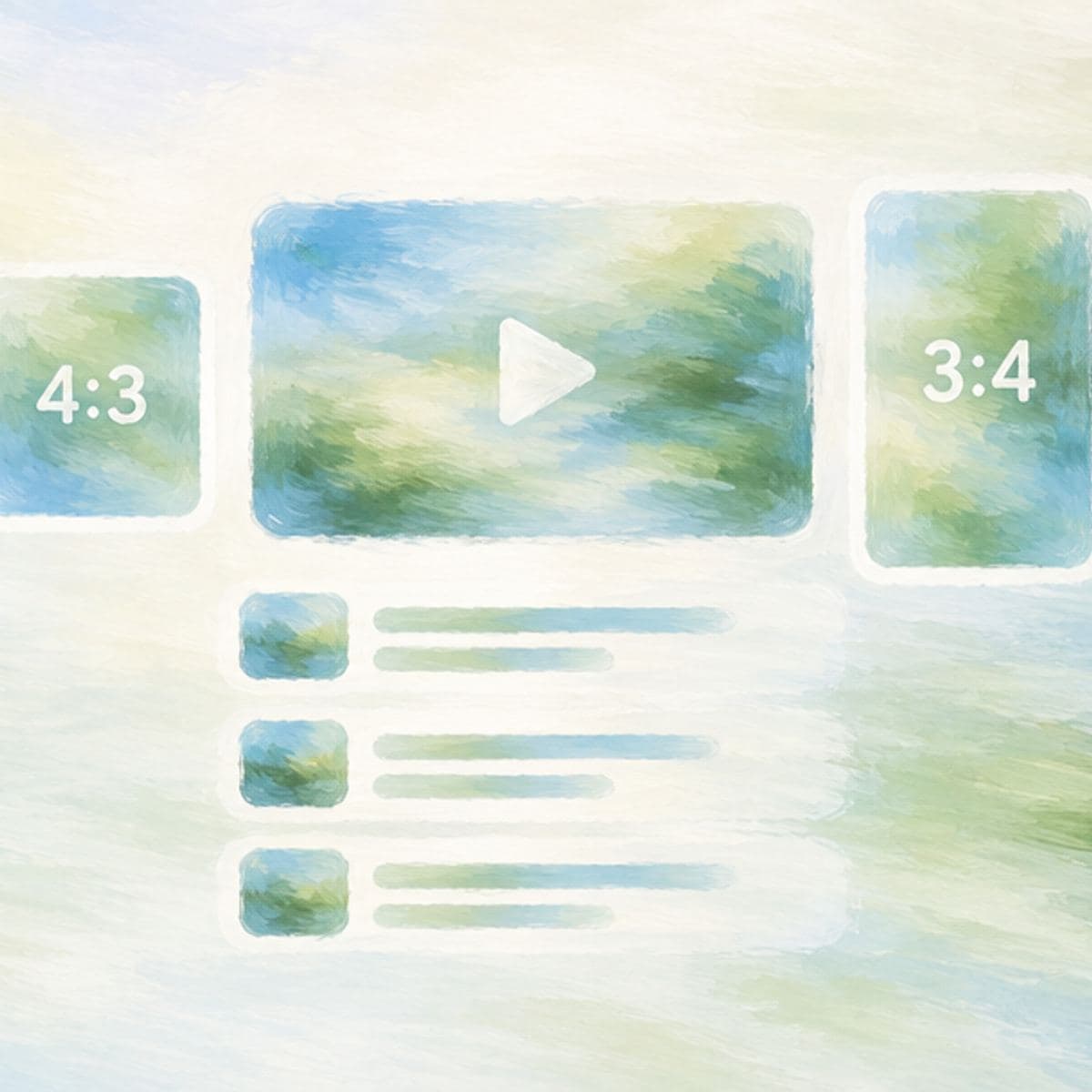
For 4:3 or 3:4 video on Sume, use a Seedance, Wan 3.0 or H3 row. Kling 3, Omni and Veo do not list those ratios. Read 2026-10-13.

Veo 3.1, Fast and Lite appear on Sume only where Google Cloud serves them: text-to-video, 720p, 4, 6 or 8 s, 16:9 or 9:16. Check your own list. Read 2026-10-13.

Tencent describes WAND-Vega as trained for vertical industries such as e-commerce. On Sume it is three text-to-video rows, 4-15 s, up to 4K. Read 2026-10-13.

Three Sume rows accept video_url: gemini-omni-flash-1.1 edits by prompt, h3-max-recast swaps people, higgsfield-genjutsu moves motion. Limits and prices.

Cactus Whistle's card reports word error rates over 86,174 utterances. Score 20 of your own clips against a human transcript before choosing it over hosted STT.

Cactus Whistle is a 16.9 MB Apache 2.0 speech-to-text model for seven languages. Run it on-device, or send the clip to Sume STT for other languages.

Alibaba's Turbo page says it supports fine-tuning, its fine-tuning overview does not list it. Test with reference images on Sume before you pay to train.

Muse Wonder takes video and audio in but replies only in text. To have it review a Sume render, use video_inspect: 8 stills by default, 24 at most.

Pick between five Sume image rows by elimination: 1:8 ratio, 11+ references, transparent PNG, native 4K, then price from 3.75 to 18.75 cents.

Midjourney's Rerun (Thinking) button retries a job that missed the prompt, but only on the alpha site. Here is the nearest retry loop with Sume's image API.

HelixWorld is a real-time audio-visual world model with open code but no hosted API. What it needs to run, what HelixBench measures, and the Sume job route.
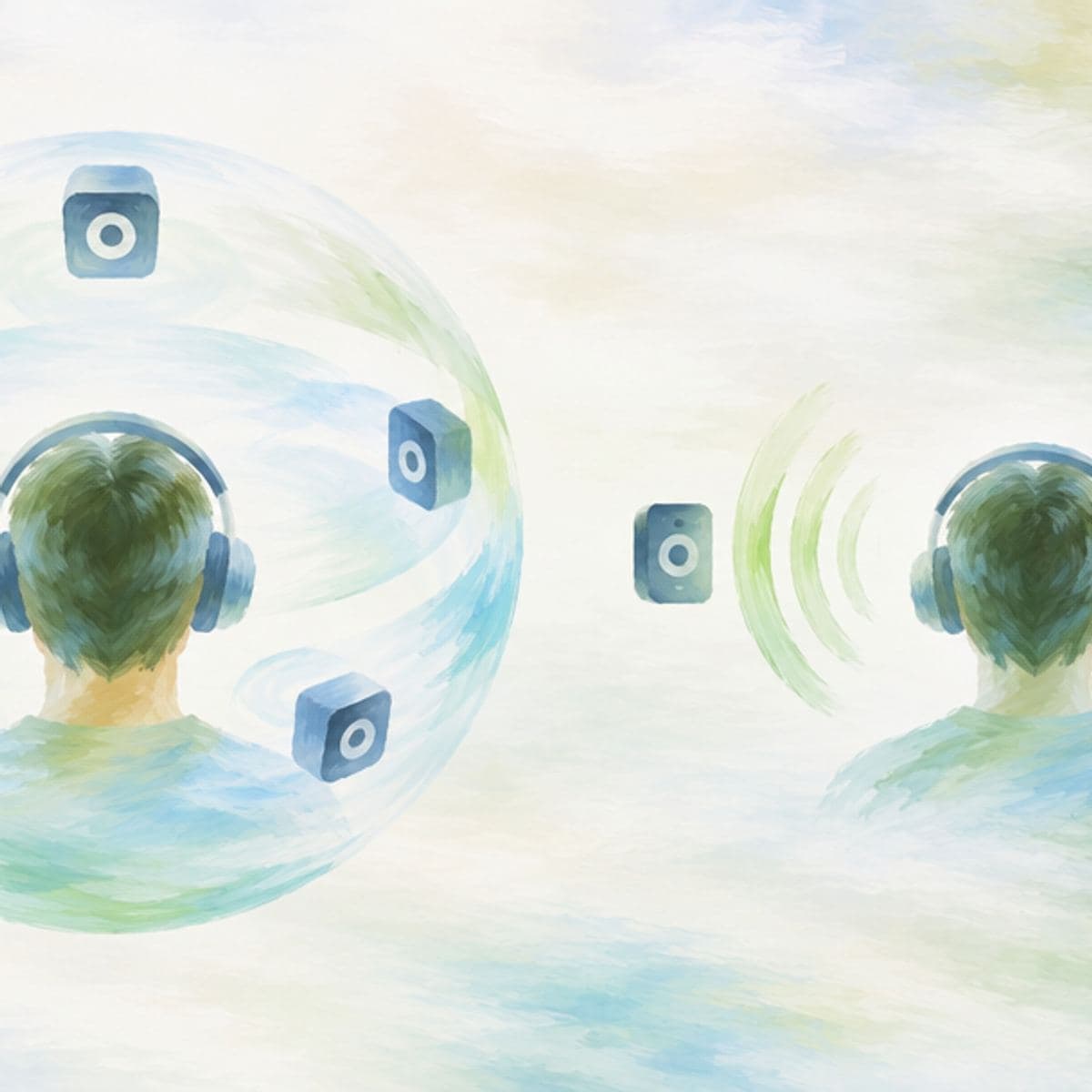
HelixWorld renders camera-aligned stereo sound in real time. Sume's video rows give native stereo or synced audio per clip, not live spatial audio. Compare.