
Make MCP Client: test Sume with Call a tool before AI runs it
Make's MCP Client app has two modules. Connect Sume's hosted MCP URL, test with Call a tool, then let Execute an action with AI choose tools.

Calling Sume from automation platforms, serverless functions, agent frameworks, and MCP clients. Each uses plain HTTPS or remote MCP, not a connector.
Make's MCP Client app has two modules. Connect Sume's hosted MCP URL, test with Call a tool, then let Execute an action with AI choose tools.

Msty Studio adds remote MCP servers over streamable HTTP with a URL and headers. Use Sume's x-api-key header, then switch paid tools off in the toolbox.

Power Automate can retry a failed HTTP action up to 12 times over about an hour, and retries count as action runs. Send one Idempotency-Key to Sume.

Power Automate allows 120 seconds for an inbound HTTP request, but Sume gives each webhook attempt 10 seconds. Put the Response action first.

In Roo Code a project .roo/mcp.json wins over global mcp_settings.json when both name the same server. Use one name for Sume and keep the key in one file.

Visual Studio resets tool approvals on tools/list_changed and shows a trust dialog when a server changes. Sume declares listChanged false, so it sends no reset.

Visual Studio leaves MCP tools disabled until you enable them and offers session, solution, or always approval. For Sume's paid tools, choose session.

Webflow's Data API allows 60 requests a minute on Starter and Basic, 120 on CMS, eCommerce and Business. Queue Sume results and honor Retry-After.

Cursor cloud agents run MCP over HTTP or stdio. Sume's hosted server is HTTP, so the key stays in Cursor's backend and OAuth is per user. What to set.

Google says Antigravity CLI replaced Gemini CLI for unpaid and Google One users. Move Sume's MCP entry from settings.json httpUrl to mcp_config.json serverUrl.

n8n 2.43.3 lists Nano Banana 2.1 and 2 Lite in the Gemini node. Sume lists 2.1 but no Lite id; here is when to use the node and when an HTTP Request fits.

--strict-mcp-config makes Claude Code use only servers from --mcp-config. A CI recipe for loading just Sume's hosted MCP, with a key, a wait limit and a cap.

VS Code 1.141 tracks background shells for agent sessions. Start a Sume render, keep the job id, and use sume jobs watch instead of repeating the paid create.

VS Code's MCP: Open User Configuration edits per-user servers. Keep OAuth read-only Sume in your everyday setup and an API key entry only where paid jobs run.

Write on Sume's consent page changes the server's abilities, not VS Code's trust decision. MCP: Reset Trust makes VS Code ask again; mcp_health shows scopes.

Perplexity passes the authorization value to the MCP server as an access token. A Sume OAuth token lasts one hour with no refresh, so use an API key unattended.

Perplexity MCP tool: server_label must match ^[a-zA-Z0-9_-]{1,64}$. A Sume entry that passes, with authorization, headers and allowed_tools.

VS Code can sync MCP config when the MCP Servers sync option is on. Keep the Sume API key out of the file with an input variable, or use OAuth instead.

Claude Code ranks a local Sume MCP entry above a claude.ai connector. That decides whether you get the API key's full tool set or OAuth's read-only one.

Sume returns tool failures as results with isError true and keeps JSON-RPC errors for protocol faults, per the 2025-11-25 MCP spec. Here is the split.

Raising Claude Code's per-tool result limit to 500,000 characters does not change what Sume returns: the server caps one MCP result at 262,144 bytes.

The MCP spec says clients must treat tool annotations as untrusted unless they come from a trusted server. Treat Sume as trusted only for your own workspace.

The 2025-11-25 MCP spec forbids access tokens in the URL query string and wants a Bearer header on every request. Keep the Sume key in headers, not the URL.

GitHub's MCP servers in Copilot policy covers Business and Enterprise, off by default. Free, Pro, Pro+ and Max users can add Sume's hosted MCP server directly.

read_busy is a retryable 503 from Sume's MCP host. Reads inside tools, including jobs_wait polls, are capped at 4 at once per owner, 512 across the host.

Gemini CLI defaults authProviderType to dynamic_discovery. For Sume that means OAuth discovery, not Google credentials. What each of the three values does.
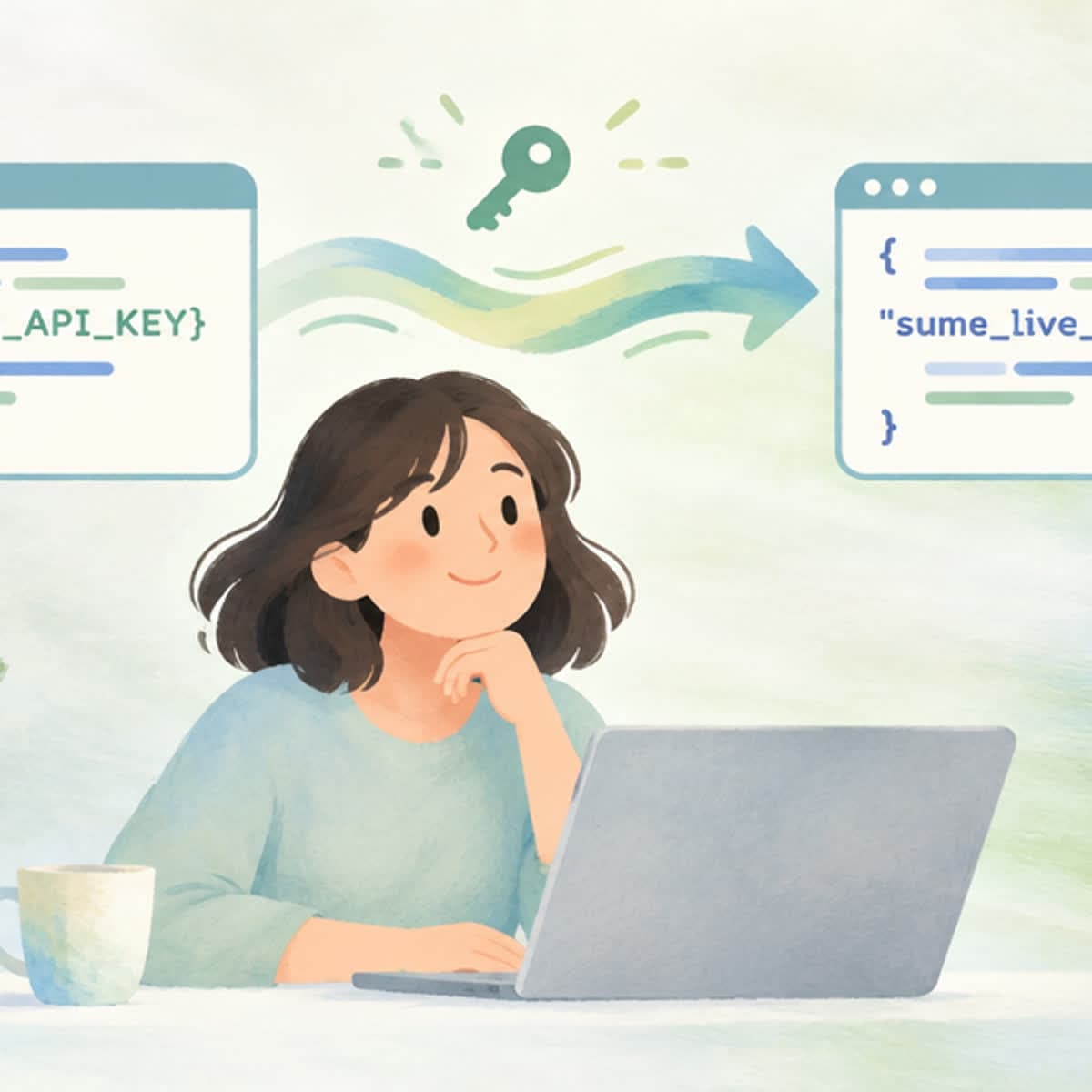
Devin Desktop expands ${file:/path} and ${env:NAME} in mcp_config.json. Put the Sume API key in a file outside the config; the 100-tool cap still applies.
The Cursor entry for hosted Sume MCP is one url field with no key in the file; OAuth sign-in happens in the client and the consent page lives on the MCP host.

Make the voice elsewhere, import the files into Sume media, join up to 20 parts for $0.01, render 3 minutes for $0.30. Total $0.31 plus your clips.

Burn captions on a clip voiced by MAI-Voice-2.1 or Flash: send the video URL and script_text, and Sume times the words. $0.20 for a clip up to 60 seconds.

Setting ENABLE_TOOL_SEARCH=false or a custom ANTHROPIC_BASE_URL turns off Claude Code tool search. What that does to a Sume MCP session.

With tool search on, Claude Code reports failed MCP servers to the model. How to read that when Sume's server will not connect, 401 or 403.

Z.ai's GLM-5.3 page lists function calling and does not mention MCP. How a GLM agent reaches Sume through an MCP client or through plain HTTP.

LinkedIn video ad captions must be a text-only SRT. Sume burns captions into pixels and has no SRT export. Build the file from video-inspect segments.

Kling's home page mentions MCP and CLI tools for batch generation. Sume's hosted MCP at mcp.sume.com has generate_video; its Kling row is kling-3 only.

Codex 0.161.0 lets approved filesystem escalation widen writes while keeping denied reads. Why a local file upload to Sume can still fail, and how to fix it.

The 0.64.0 preview moves settings from V1 to V2. After you upgrade, confirm the Sume hosted MCP server still connects with a free read before any paid call.

Airtable counts a run each time a trigger fires, even if actions fail. If each of 100 Sume deliveries triggers one, the Free plan's 100 monthly runs are gone.

Put the n8n Production URL in Sume's webhook_url. The Test URL only works while the editor is listening, so a holiday batch would burn retries against it.

Sume's docs list no Zapier, Make or n8n app. Start Formats over HTTP, receive results on a webhook_url, and poll as a backup. Limits of each tool.

A plugin can ask for a sensitive value and reuse it as ${user_config.KEY} in an MCP header. A Sume plugin manifest that keeps the key out of settings.json.

Codex 0.161.0 adds account-scoped grant cleanup for enterprise MCP authentication. How that sits with Sume's one-hour OAuth token and its revoke endpoint.

Airtable run history lasts 2 weeks on Free, 3 years on Enterprise. Save the Sume run id and output URL in the record so a holiday audit does not depend on it.

Airtable says Run a script is not available on Free. Start Sume Format runs from a service you control, and let Airtable receive results as plain records.

Zapier's Catch Hook URL does not change between test and live. Use Sume's webhook.test delivery to check the Zap before a real run sends a real result into it.

Make accepts 300 incoming requests per 10 seconds. A 100-item Sume queue with per-item webhooks and 16 in flight stays far below that. When 429 and 400 matter.
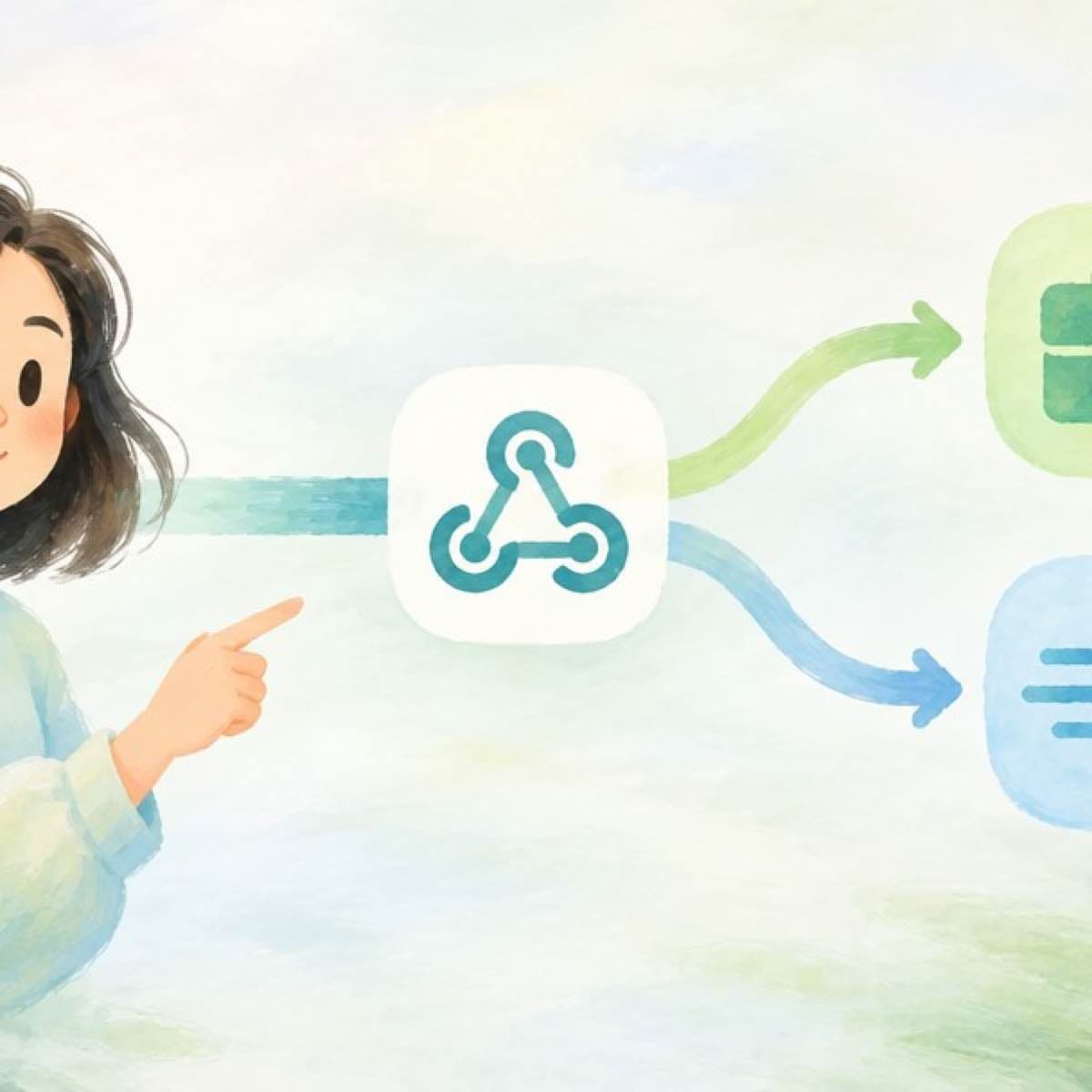
Job and run webhooks share one HMAC scheme but not one payload. A 27-line TypeScript handler verifies once, routes on event, and answers 204 to the rest.

A 29-line http.server receiver that refuses an empty secret, checks sume-v1 in a 300-second window, takes the two-signature header, and 204s webhook.test.