
A 3-second sting from an Omni clip's native audio for $0.01
Omni clips always carry native audio. Audio detach with a 0 to 3 s range pulls that sound out as a wav for $0.01, against $0.125 for a new Lyria bed.

Sume media tools by API: trim, filter, captions, frames, inspect, speech-to-text, upscaling, background removal, transitions, and Timeline assembly.
Start with: Video editing API limits: Sume media tool caps in one table
Omni clips always carry native audio. Audio detach with a 0 to 3 s range pulls that sound out as a wav for $0.01, against $0.125 for a new Lyria bed.

Vidu Q4 Preview can voice characters. Sume's video captions API burns captions onto any public HTTPS clip; it fails on silent clips unless you send cues.

Video filter accepts clips up to 300 seconds, so a whole 180-second Short dims in one $0.02 job. A 10-minute TikTok ad needs at least two.

A 7-second clip with three people swapped via H3 Max Recast costs $2.625 at 768p or $3.9375 at 1080p on Sume. Three photos do not change the rate.

A 480-px-wide vertical clip fails TikTok's 540x960 floor. Sume video upscale starts at 1.1, which gives only 528 px. Use 1.2 or more; 25 clips cost $2.70.

Joining audio inside one render is free with audio.parts[] (up to 20 slices). The $0.01 concat job pays off only for a reusable file. A decision table.

Timeline audio returns wav (sample-exact) or mp3 (smaller, padding at each edge). 1,800 s is 158.76 MB as 44.1 kHz mono wav vs 28.8 MB at 128 kbps.

Write the track as three timed sections: build, drop, sting. The Music Router takes it for a flat $0.125; the whole 15-second ad is $2.305 on Sume.

Mixing Fabric and MiniMax H3 Max lip-sync clips in one Sume video risks a frame-rate mismatch. Pick one per run and check fps with ffprobe on the first clip.

Caption a talking-head clip with the Sume API: pick a style, move the line off the face, set words per card. One request, $0.20 for up to 60 seconds.

Music can bury speech and trip speech-to-text. Sume documents three ways to supply your own wording: script_text, a words array or cues. Which to pick.

For a 16:9 source, a centred 9:16 crop is x 0.3418, y 0, width 0.3164, height 1. One $0.02 video-filter job, checked free first. Examples for 1920x1080.

A 3-minute Short needs 30 six-second clips, a 20-minute Reel 200, a 10-minute TikTok ad 100. Slot limits, chunked renders and Timeline cost for each.

Change caption placement with design.placement.anchor_ratio and restyle with source_caption_id: the same word timings, no second speech-to-text run.
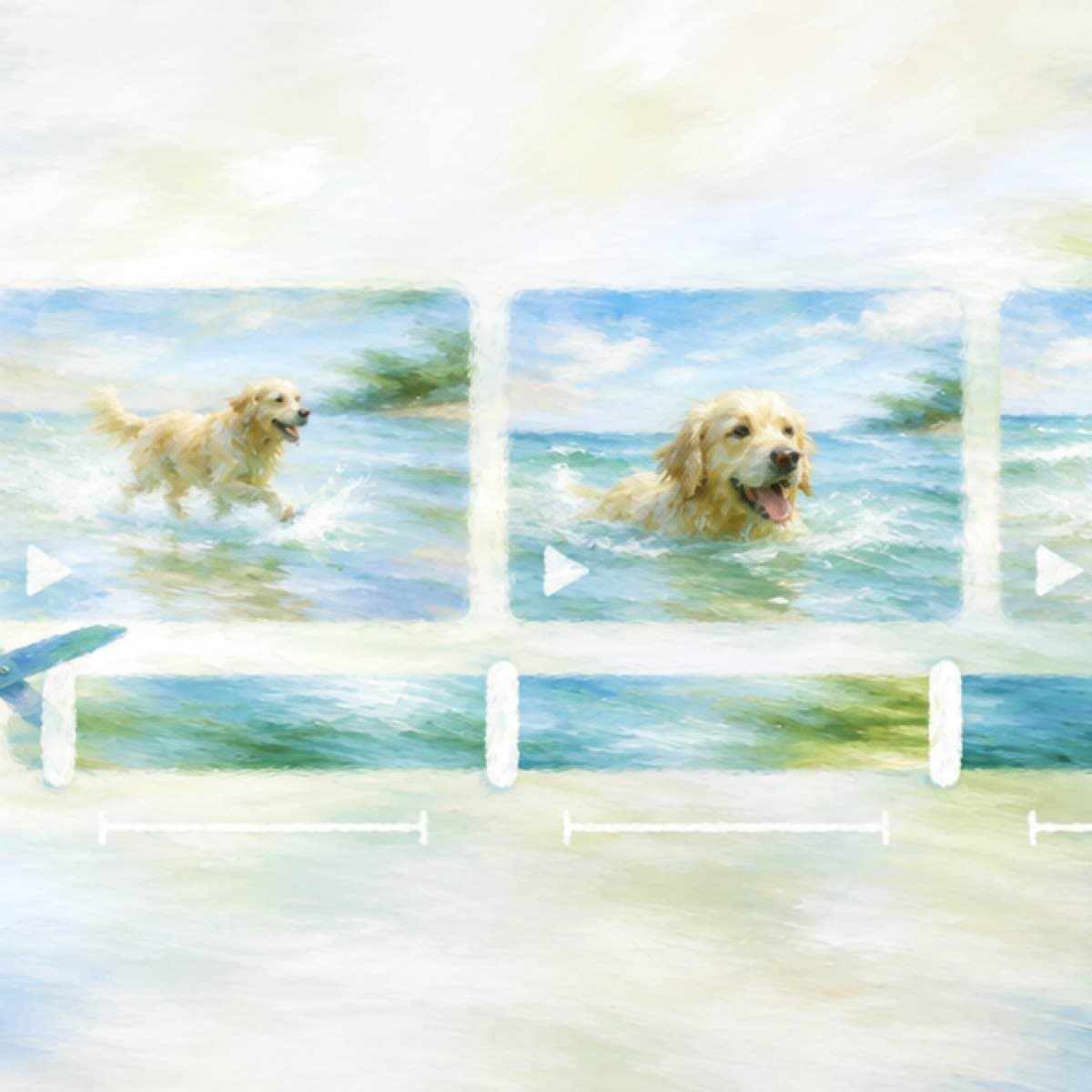
Sora 2 left the API but a ChatGPT clip can still seed a new render. Gemini Omni Flash 1.1 on Sume takes up to 3 reference videos, each 3 s at most.

video-inspect reserves one minute of speech-to-text unless you send duration_seconds (max 600). Why a 180 hint matters, the $0.01 per minute rate, and the 400s.

Build a role-play or interview track by generating one TTS line per turn in each speaker's voice, then joining up to 20 turns into one gapless file for $0.01.

A video-filter filtergraph is refused for eight reasons, from a [0:v] label to a quote character. What each one means and how to rewrite the graph so it passes.

For a 1.85:1 trailer, trim each shot, then crop it at its own x offset: width 0.304054, x 0 to 0.695946. A three-shot plan with job count, cost and order.

Video trim with audio drop returns a silent MP4; audio detach returns a separate wav or mp3 and leaves the video alone. Which to use, and the warnings.

video-inspect and video-frames take a list of times or a sample rate, never both. The codes, the 24-still cap, the fps 2 ceiling, and the empty object.

Dim amount takes values above 0 up to 1. Zero, negatives and 1.2 return video_filter_amount_out_of_range. What it does, and how to lift a dark clip.

In Timeline 1.0 a slot's declared start is its place on the audio spine, fade or no fade. The compiler compensates for the xfade overlap; gaps hold a frame.

A 5:4 clip crops to 9:16 with width 0.45 and x 0.275. At 1280x1024 that is 576x1024, at 1600x1280 it is 720x1280. Two sizes, one body, and why it is exact.

A 16:10 recording needs crop width 0.3515625 for 9:16: 900x1600 at 2560x1600, but 674x1200 at 1920x1200 because 675 is odd. The request and the rounding.

The byte arithmetic for a 3-minute track from audio detach: stereo 48 kHz wav, mono 16 kHz wav and 128 kbps mp3, with the fields that set each size.

Trim, detach and inspect take sources up to 1800 s; filter, frames and compose stop at 300 s. The error each returns and the order to cut a long file.

Video captions and face swap take a public HTTPS URL; trim, filter, frames, inspect, detach, compose and timeline need your workspace's media.sume.com file.

If one instant fails to extract, video-frames sets that frame's url to null and the job still completes. How to detect it and retry only that time.

A 2:1 (18:9) landscape clip needs width 0.28125 for 9:16: exact at 1920x960 (540x960), 606 px at 2160x1080. The offset, the rounding and the full request.

A crop op takes four fractions and dim takes one amount; any extra key returns unsupported_filter_op_field. The exact key lists and where the extra work goes.
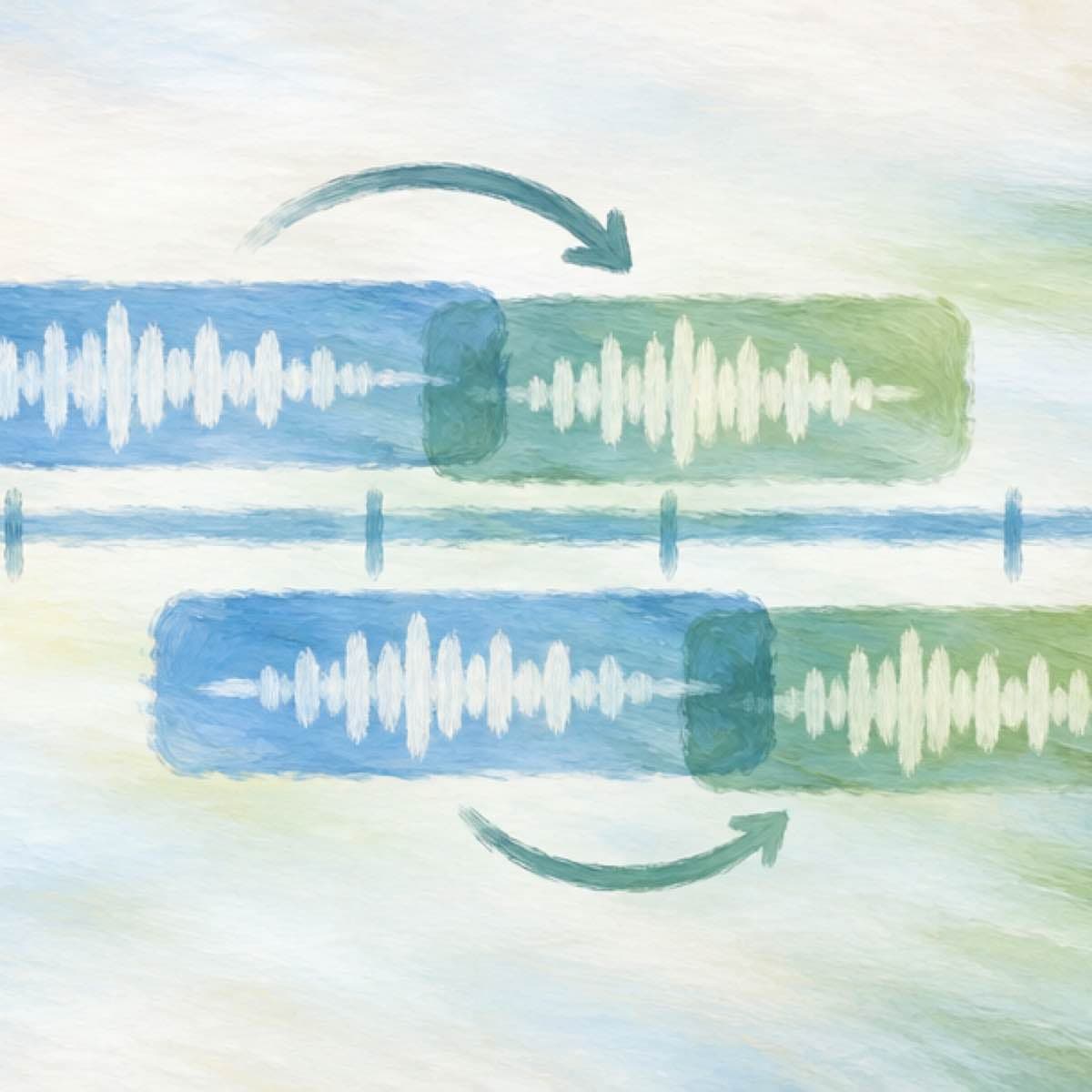
Timeline audio split takes up to 20 ranges that may overlap, so one hook sentence can open and close a video without re-recording or re-synthesising it.

A 1080x1920 clip becomes 1080x1620 (2:3) with a crop of height 0.84375. Pinterest's page recommends 1000 x 1500 for Showcase and Collections video.

A 1080x1440 clip becomes 960x1440 (2:3) by cropping width to 0.8889. Pinterest recommends 2:3 for Showcase and Collections; here are the numbers and request.

A 1080x1920 clip becomes 1080x1350 (4:5) with a crop of width 1 and height 0.703125. Meta's Facebook feed page lists 4:5 at 1440x1800; here is the request.

A 1000x1500 Pinterest video becomes 1000x1250 (4:5) with a crop of height 0.8333. Facebook's feed page lists 4:5 at 1440x1800; request inside.

Gemini Omni Flash 1.1 outputs 3 to 10 seconds. A 2-second sting on Sume is a 3-second clip at $0.375 (720p) plus a $0.02 video trim.

TikTok's in-feed page lists 1:1 with a 640x640 minimum. A 1080x1350 feed clip crops to 1080x1080 with height 0.8, y 0.1 centered, then clears it easily.

Meta's Facebook feed video spec lists 120 px minimum sides. Sume Timeline renders even sizes from 256 to 2160, so the floor never blocks an upload.

Meta's Facebook feed page requires a fixed frame rate. Sume Timeline takes output.fps 24, 25, 30 or 60, and mixed-rate sources are resampled with judder.

A 2520x1080 ultrawide clip becomes 1080x1080 with a crop of width 0.4286. TikTok's in-feed page lists 1:1 at a 640x640 minimum. Request and numbers inside.

A 1280x720 clip cropped with width 0.5625 gives 720x720, which clears TikTok's 640x640 square minimum with 80 px to spare. Request and numbers inside.

YouTube recommends 16 Mbps for 1440p SDR. Sume Timeline caps each edge at 2160, so 2560x1440 is not possible; the closest 16:9 render is 2160x1214.

Meta lists a 1% aspect ratio tolerance for Instagram feed video ads. Read as relative, at 1080 wide that is about 1902-1938 px tall; Sume's 1080x1920 is exact.

TikTok's in-feed page lists 960 x 540 as the minimum for 16:9. Sume Timeline accepts 960x540, 1280x720 and 1920x1080, all at $0.10 per output minute.

Gemini Omni first and last frame turns two stills into a transition. On Sume, image_url plus end_image_url for 10 seconds at 1080p costs $1.875.

On Sume, Omni's edit mode takes a video_url and a prompt, defaults to 720p and accepts no aspect_ratio or duration. A 16:9 source stays 16:9, so plan the crop.

A 1620x1080 (3:2) clip becomes 864x1080 (4:5) with a crop of width 0.5333. Meta lists 4:5 for the Facebook feed; here is the request and the catch.