
Video editing board: Wan 3.0 1,187, Seedance 2.5 1,151; Sume uses Omni
Wan 3.0 tops the AA video-editing board at 1,187 Elo. Sume's documented edit route is video_url on gemini-omni-flash-1.1, third at 1,139. Price inside.

The models behind Sume's video, image, speech, and music endpoints: ids, clip lengths, resolutions, aspect ratios, audio, references, and migration.
Start with: What AI models does Sume support? Every model id, by API surface
Wan 3.0 tops the AA video-editing board at 1,187 Elo. Sume's documented edit route is video_url on gemini-omni-flash-1.1, third at 1,139. Price inside.

The Wan 2.2 README fixes OOM with three flags: offload_model, convert_model_dtype and t5_cpu. Which commands need 80 GB and 24 GB, and what it does not promise.

Wan 3.0 is first on the AA-Video-T2V v2.0 board at 1,156 Elo and $12.00 a minute. On Sume, wan-3.0 at 1080p bills $0.25 a second, which is $15.00 a minute.

Wan 3.0 leads Seedance 2.5 by 13 Elo on the AA text-to-video board. On the standard Elo scale that is a 51.9% win chance per vote. Arithmetic for other gaps.

Hunyuan's line is 100 million monthly users, H3's is US$20 million revenue, LTX-2.5's is $10 million with affiliates counted. Wan 2.2 has none.

Tencent's HunyuanVideo license says do not use or display Outputs outside the Territory, which excludes the EU, UK and South Korea. Clause by clause.

H3 and HunyuanVideo bar using outputs to improve other models. LTX bars commercial distillation. Wan 2.2 is Apache 2.0. The clauses, quoted from vendor files.

H3 requires a visible 'MiniMax H3' label in commercial products. Hunyuan only encourages 'Powered by'. LTX and Wan ask for notices and a license copy. Per file.

Checked against Sume's model catalog on 2026-10-08: Haiku 5.5 and GLM 5.3 Flash have enabled rows; Mistral Large 4, Clef and Strands Decider 2B have none.

An 8-second Gemini Omni Flash 1.1 clip costs $1.00 at 720p, $1.50 at 1080p and $3.00 at 4K on Sume. Audio is always on and the ratio is 16:9 or 9:16.

The HunyuanVideo README lists 45 GB for 544x960 and 60 GB for 720x1280 at 129 frames, tested on one 80 GB GPU. FP8 saves about 10 GB. Table and hosted route.

README latency for a 1280x720, 129-frame, 50-step clip: 1,904 s on 1 GPU and 338 s on 8. The GPU-seconds each setup burns, and what it means for hosted jobs.

Kling 3 Pro on Sume is $0.14 per second with audio off and $0.21 on. At 15 s across 100 SKUs that is $210 vs $315, a $105 difference.

The August 11, 2026 LTX-2.x license adds a Non-Commercial carve-out, a current-version clause and provenance duties. What both texts say, side by side.

The LTX-2 README quick start pulls about 66 GiB for five LTX-2.5 files, including a 12B Gemma text encoder. What to budget, and what Sume lists instead.

Mistral's own Hugging Face page lists Mistral Large 4 as upcoming with an October 31 ETA. What is known, what is not, and why Sume's agent run is unaffected.

OpenRouter shows 83.39% availability over 3 days for Hy Image 3.5 Preview, one provider. At 500 images that is about 83 failures to retry. Plan B on Sume.
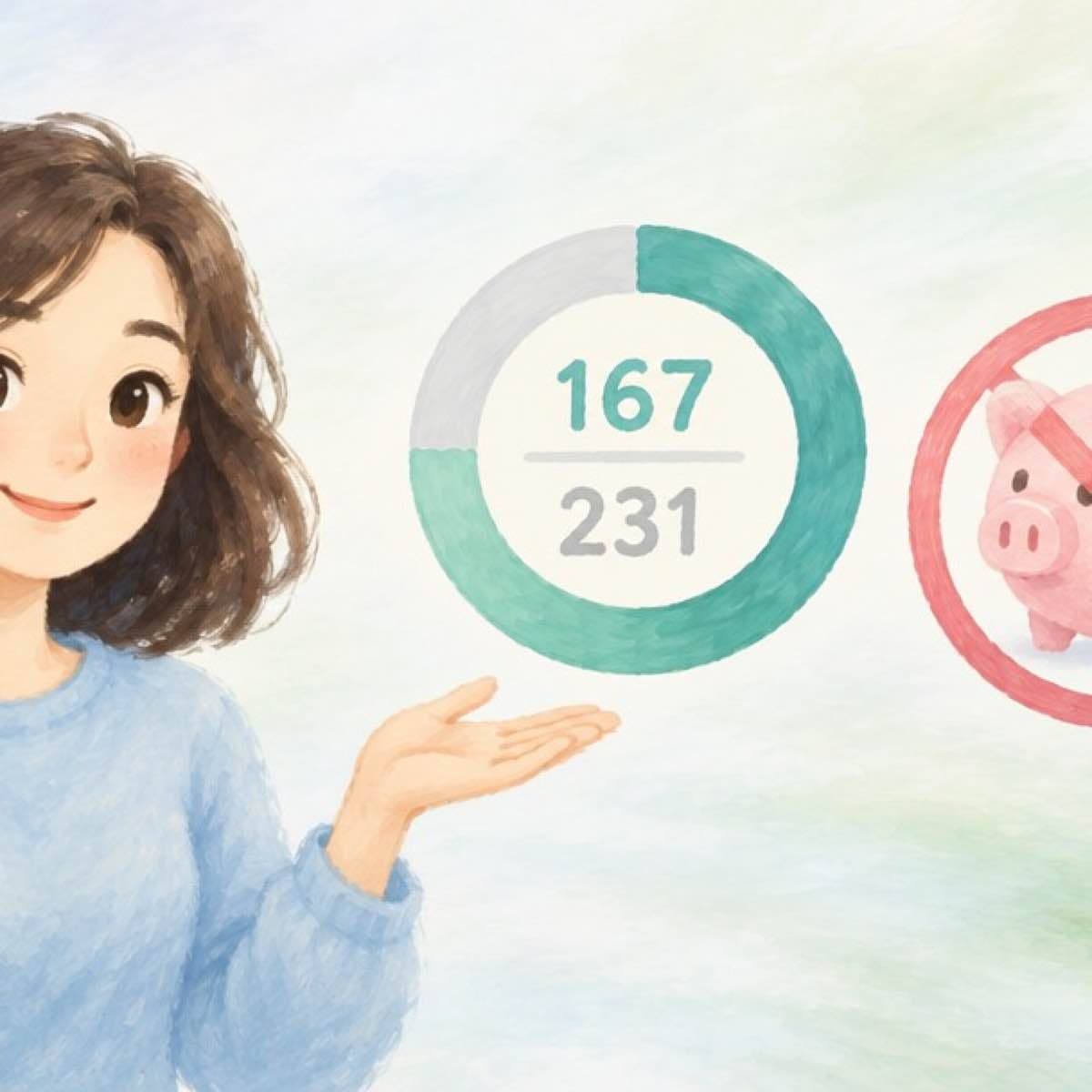
The Strands Decider 2B card reports 167 of 231 correct on JevBench public (72.3%). Fine for routing, not payment control. Why Sume's spend cap decides.

MiniMax H3 weights exclude the US by license. HunyuanVideo, Wan 2.2 and LTX-2.5 read differently. A territory table and a hosted route on Sume.

Wan 2.2's README offers prompt extension via Alibaba DashScope (DASH_API_KEY) or a local Qwen model. What each needs, and what Sume's request takes.

A lookup table: text drafts, photo edits, label text, 4K, 12+ references. Maps Nano Banana 2.1, Imagen 4, GPT Image 2.5 and Hy Image to what Sume lists.

H3 says you own outputs, Hunyuan, LTX and Wan 2.2 claim no rights in them. What each clause adds or withholds, read from the vendor files.

Cost of 100, 500 and 1,000 GPT Image 2.5 images at each quality tier on Sume: low, medium, high, xhigh and max, with the arithmetic behind xhigh and max.

GPT Image 2.5 accepts up to 16 input_references and Ideogram 4.5 accepts 5 in total. A short Python script reads every model's reference limit from the catalog.

Which Sume image models list 4:5, 9:16 and 16:9 in one catalog row, which four miss 4:5, and what each costs per image.

Five Sume image models cannot take input_references: Soul, Imagen 4 Fast, Imagen 4 Ultra, Recraft V4 and Qwen Image Max. Here are the 14 that can, with prices.

Flux 2 Pro bills 4 cents and Flux 2 Flex 7 cents on Sume. Both list 13 ratios, including 21:9, and both edit. Cost of 100 to 10,000 images.

Grok Imagine bills 3 cents per image on Sume, returns one image per call, lists 13 ratios including 9:20 and 19.5:9 phone shapes, and supports edits.

Ideogram 4.5 on Sume bills 4, 8 or 28 cents per image by quality, the same at 1K and 2K. Costs for 100, 500, 1,000 and 10,000 images, with the x1.25 arithmetic.

Imagen 4 Fast bills 3 cents and Ultra 8 cents on Sume. Both are text-to-image only with five ratios; Ultra adds 1K and 2K tiers. Cost of 100 to 10,000 images.

sume/music-auto resolves to Lyria 3.5 today and can move without notice. When to pin lyria-3.5 on Sume and how job.request.routed_model records the engine.

A product-shot edit from one reference photo works on 14 Sume image models. 100 shots cost $3 to $27. Which also take 4:5, and when to use 16 references.

Recraft V4 on Sume bills 5 cents per image, is text-to-image only and lists webp as its only output format. A short Pillow script converts results to PNG.

Seedream 5.0 Lite and 4.5 both bill 5 cents on Sume; Seedream 4.0 bills 4. Their listed ratios match and all three edit. What the catalog does and does not say.

Nine Sume image models bill 5 cents or less per image. See the cost of 100, 500 and 1,000 images, plus which ones edit and which take 4:5.

What 100, 500, 1,000 and 10,000 images cost on each of the 19 models in the Sume image catalog, with the per-image arithmetic shown.

Transparent PNGs from the Sume image API need background: transparent, which only the two GPT Image 2.5 rows list. See the request, price and the 400 elsewhere.

Higgsfield Soul is the cheapest Sume image model at 1 cent. It is text-only, takes n of 1 or 4 and 720p or 1080p, so 10,000 images is 2,500 calls and $100.

Upgrade 100 GPT Image 2.5 hero images from high to xhigh or max: the extra cost on Sume is $5 or $20 at 1024-class size. The arithmetic is shown.

On Sume, Nano Banana 2.1 bills 10 cents and Pro bills 19. Both take edits and four resolution tiers, but Pro does not list 4:1, 1:4, 8:1 or 1:8.

Nano Banana 2 is retired on Sume. The ids nano-banana-2 and google/nano-banana-2 still work and run as Nano Banana 2.1, and the job stores the 2.1 id.

All Sonic ids in Sume's TTS router list 38 micro-dollars per character and a 20,000-character cap. sonic-latest is an alias for 3.6. What to pin and why.

Test text rendering in AI images for $7.00: 20 prompts on Ideogram 4.5, GPT Image 2.5, Qwen Image Max and Nano Banana 2.1, with the cost of each on Sume.

Sume lists Wan 3.0 references as up to 10 images, 5 videos (15 s total) and 5 audio tracks (15 s total). Sume docs do not claim 50 references.

Six Sume image models that list 16:9 and 4:5 for thumbnails and covers, from Qwen Image at 3 cents to Nano Banana 2.1 at 10, with the cost of 12 options.

Seedance 2.0 stops at 15 s on Sume; 2.5 takes 4 to 30 s. At 720p 9:16, 20 s on 2.5 is $11.56, two 10 s 2.0 jobs $7.56, one 20 s Wan 3.0 job $2.50.

3:2 is the classic camera ratio, yet GPT Image 2.5 and GPT Image 2 do not list it on Sume. Fourteen other rows do. Table of rows and the crop workaround.

Four GPT Image 2.5 drafts in one Sume call at quality low cost 4 cents; a dollar buys 25 such calls. The arithmetic, the n field and when to go to high.